Why You Shouldn’t Ride Muddy Trails
You’re not the first person to take hours to prep your bike, pack your gear, drive to the trailhead and arrive to a, seemingly, slightly wet trail and thought “eh, it’s not that bad. It’ll be fine” and rode it anyways. You took all that time to get there. Like 3 hours in total? We get it.
But here’s the deal, “a little wet” can turn into “a lot of damage” real quick.
Wet trails ARE delicate little noodles
Even the best built trails depend on firm dirt and properly working drainage. When the ground gets saturated, it basically loses its backbone. Suddenly, your tires (or even your shoes) can reshape the trail in just a few laps… and not in a good way.
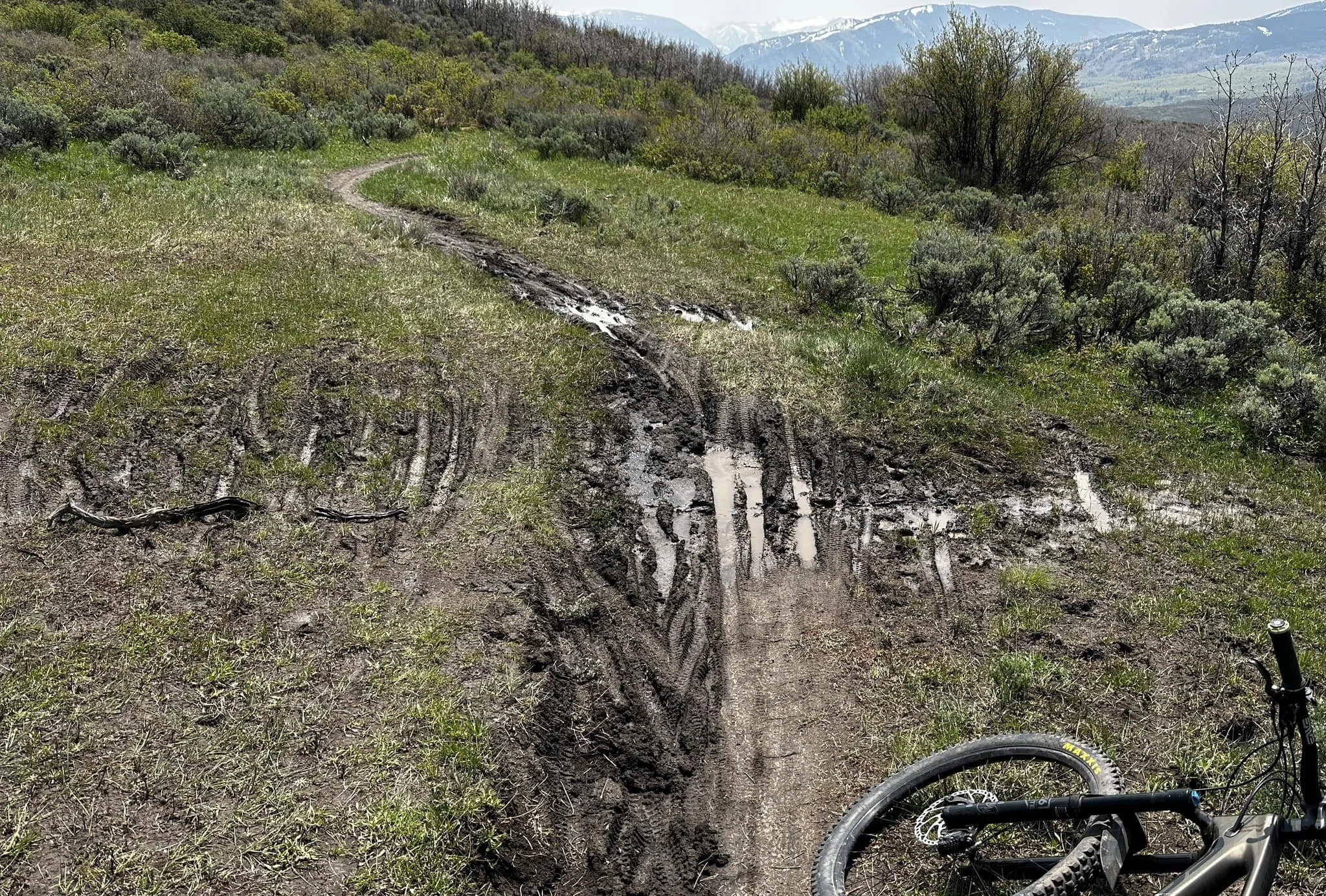
Mud: fun to say, bad to ride
Riding muddy trails doesn’t just make your car ride home dirtier, it can:
Carve ruts into the trail
Create little puddle pockets that never seem to go away
Turn a nice singletrack into a “choose your own adventure” wide trail
Mess up drainage by pushing dirt where it definitely shouldn’t be
And those ruts? They don’t magically fix themselves. They turn into water magnets. Water sticks around, things stay muddy longer, and suddenly that one soft spot becomes a full blown problem child.
But, choosing not to ride when trails are muddy is one of the simplest ways you can protect the trails we all love, reduce volunteer workload, and keep systems open and enjoyable longer.
One ride now = MONTHS of “ugh” later
Sure, it might feel rideable right now. But the aftermath? Not so great.
Those ruts harden into bumpy, awkward tread. Puddles become permanent features. Riders keep going around the mess, and before you know it, the trail is twice as wide and half as fun. Sometimes it takes weeks of dry weather for things to truly recover.
Fixing mud damage IS not exactly a quick tune-up
Every rut and mudhole has to be repaired eventually, which means volunteers are out there:
Re-shaping the trail surface…all over again
Rebuilding drainage so water actually flows where it should…all over again
Hauling rocks and materials, which is not light work…all over again
Closing down all those extra “oops I went around it” trail lines
That’s a lot of time and energy spent to do things for the umpteenth time. That time and energy could’ve gone into building new trails, adding flow, or making your next ride even better.
So… what should you do instead?
When trails are wet:
Check trail conditions before heading out
Opt for rides on durable surfaces (gravel, pavement, trainer sessions, etc.)
Give it a day or two. Trails bounce back faster than you think
When in doubt, play it safe and go home.
PROTIP: If you’re leaving tracks or spraying mud behind you like a rooster tail… it’s too wet.
The bottom line
Skipping a muddy ride might not feel heroic in the moment, but it’s one of the easiest ways to take care of the trails we all love. Less damage means fewer repairs, better riding, and more open trails for everyone.
So yeah, sometimes the best ride is the one you don’t take.
Thanks for looking out for the trails. Future you, andourvolunteers, will appreciate it.